
May 16, 2026 · News
Red Light Therapy at Home: What It Treats and What It Doesn't
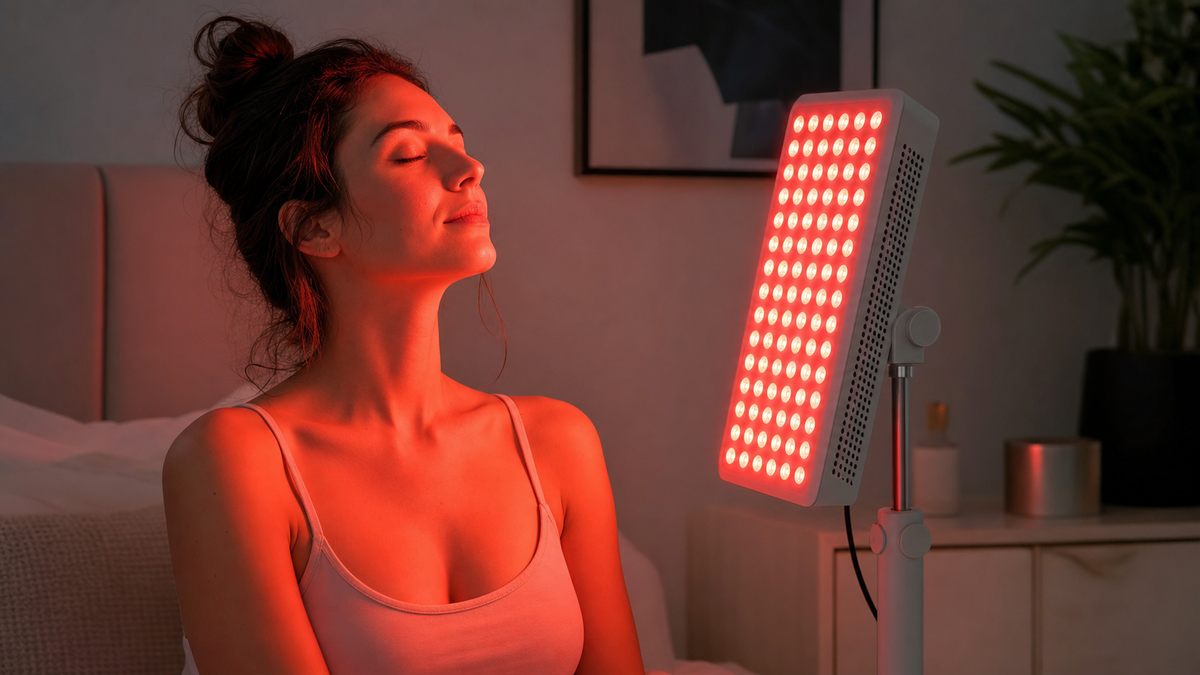

Red Light Therapy at Home: Does It Actually Work?
Interest in red light therapy at home has exploded over the past few years, and so has the number of devices, claims, and — frankly — confusion about what the science actually supports. Red light therapy is a real, researched modality with genuine clinical applications. It is also the subject of significant hype that outruns the evidence. This guide explains the underlying mechanism in plain terms, covers what is genuinely FDA-cleared, and is honest about the areas where claims exceed the science.
What Is Red Light Therapy? Photobiomodulation Explained
Red light therapy — formally called photobiomodulation (PBM) — works by delivering specific wavelengths of red and near-infrared light to the skin and underlying tissue. The wavelengths most commonly used in clinical and consumer devices fall in the 630–700nm range for red light, and 800–1100nm for near-infrared. These wavelengths are different from UV light (which damages DNA) and are considered non-ionizing — they don't damage cells.
The proposed mechanism centers on the mitochondria — your cells' energy-producing organelles. Specifically, light in these wavelengths is absorbed by a protein called cytochrome c oxidase, a key enzyme in the mitochondrial electron transport chain. When cytochrome c oxidase absorbs photons, it's thought to temporarily increase the production of adenosine triphosphate (ATP) — cellular energy — and reduce reactive oxygen species (oxidative stress). The downstream effects include reduced inflammation, enhanced cell signaling, and accelerated tissue repair.
The Cleveland Clinic notes that photobiomodulation has been studied in hundreds of clinical trials for a range of applications, and UCLA Health describes it as one of the more scientifically grounded light-based therapies available to consumers today. That said, the quality and consistency of that research varies significantly by application.
What Red Light Therapy Is FDA-Cleared For
The FDA clearance process for light therapy devices is important to understand. Clearance (under 510(k)) doesn't mean the FDA has verified efficacy — it means the device has been shown to be substantially equivalent to an existing, legally marketed device. Still, FDA clearance is a meaningful signal that the manufacturer has provided safety and performance data. Here are the application areas with the strongest clinical and regulatory support:
Skin Aging and Wrinkles
This is the best-documented consumer application. Multiple randomized controlled trials have shown that red light in the 630–660nm range may support improvements in skin texture, collagen density, and the appearance of fine lines. A 2014 study published in Photomedicine and Laser Surgery involving 136 participants found significant improvements in skin complexion and texture after consistent red light therapy sessions. Several FDA-cleared devices are available for home use in this category.
Acne Treatment
Blue light (405–420nm) is more commonly used for acne because it targets Propionibacterium acnes bacteria directly. However, red light is also used in combination protocols to reduce the inflammation that accompanies acne lesions. FDA-cleared combination blue/red light devices for acne are available for home use and have a solid evidence base, particularly for mild-to-moderate inflammatory acne.
Hair Regrowth (Androgenetic Alopecia)
This is a surprisingly well-supported application. Multiple clinical trials and several FDA-cleared devices (including helmets and combs) exist specifically for treating pattern hair loss (androgenetic alopecia) in men and women. A 2013 meta-analysis in the Lasers in Surgery and Medicine journal found statistically significant improvements in hair density with low-level laser therapy. The mechanism is thought to involve increased ATP in follicular cells and reduced inflammation around follicles. This is one of the most evidence-backed home use cases.
Mild Pain Relief and Muscle Recovery
Red and near-infrared light therapy has been studied for musculoskeletal pain, including joint pain and delayed onset muscle soreness (DOMS). A Cochrane review has examined low-level laser therapy for chronic neck pain and found short-term pain relief benefits compared to placebo. The evidence for muscle recovery in athletes is also growing, with several studies showing reduced soreness and faster recovery when devices are applied post-exercise. These are FDA-cleared indications for some professional-grade devices.
What Red Light Therapy Does NOT Reliably Do
Honesty matters here, because the marketing in this space often runs well ahead of the research.
Weight Loss
Some devices and clinics market red light therapy as a non-invasive fat reduction tool. The evidence for meaningful fat loss or body contouring via consumer-grade red light devices is weak and inconsistent. While some studies suggest minor effects on localized fat cell size, the effect sizes are small and the clinical significance is questionable. Don't purchase a red light panel expecting it to replace diet and exercise for weight management.
Depression and Mood Disorders
A handful of small studies have explored transcranial near-infrared light therapy for depression, with some interesting preliminary results. However, these studies are early-stage, use specialized high-power equipment not available in consumer devices, and the evidence is nowhere near sufficient to recommend red light therapy as a treatment for depression or other mood disorders. Bright light therapy (which targets the circadian system via eyes, not the skin) has stronger evidence for seasonal affective disorder — but that is an entirely different mechanism and device category.
Cancer Treatment
Photodynamic therapy (which uses light-activated drugs to target cancer cells) is a legitimate medical procedure — but that is a clinical intervention, not consumer red light therapy. Consumer devices cannot treat cancer. Full stop.
How to Use Red Light Therapy Safely at Home
If you've decided to try a home device, here are practical guidelines to maximize benefit and avoid unnecessary risk:
- Distance and dose: Most devices recommend 6–12 inches from the skin for 10–20 minutes per session. Closer is not always better — some research suggests a biphasic dose response, where too much light can reduce or negate benefits.
- Consistency matters: Most positive clinical outcomes come from 3–5 sessions per week over multiple weeks, not occasional use. Build it into a routine.
- Eye protection: Red light is not harmful to eyes in the same way UV light is, but devices can be intensely bright. Use goggles rated for your device's wavelength if the device is near eye level, and avoid staring directly at the light source.
- Clean skin: Use the device on clean, dry skin without sunscreen or cosmetics — these can block light penetration.
- Photosensitizing medications: Certain antibiotics (like doxycycline), retinoids, and some antidepressants can increase photosensitivity. Talk to your doctor before using red light therapy if you're on these medications.
- Skin conditions: Active skin infections, open wounds, and certain pigmented lesions should not be treated with light therapy without physician guidance.
VISO red light devices available at Workoutyes are designed for home use and reflect the current generation of consumer-grade photobiomodulation technology. For products that may qualify for HSA or FSA reimbursement with a Letter of Medical Necessity, browse the HSA & FSA Eligible Collection — red light therapy devices are among the product types that may qualify through TrueMed at checkout. If you're also exploring supplement-based recovery support, the Magnesium Complex (8 forms, 1000mg) stacks well with a light therapy routine for sleep and muscle recovery. For overall nutritional support, the Daily Liquid Multivitamin + Minerals covers your micronutrient foundations.
Frequently Asked Questions
How long does it take to see results from red light therapy?
For skin aging and texture, most users report visible improvements after 8–12 weeks of consistent use (3–5 sessions per week). For muscle recovery and pain relief, some benefit may be felt after just a few sessions. Hair regrowth studies typically run 16–26 weeks — this is a longer-game application. Managing expectations is important: red light therapy is not a quick fix but a consistent-use tool.
Can I use red light therapy every day?
Most protocols suggest daily use is fine for short sessions (10–20 minutes), though many studies use 3–5 days per week. There is some evidence that daily use is as effective as every-other-day use for most applications. If you experience skin irritation or increased sensitivity, reduce frequency. More is not always better — dose consistency matters more than intensity.
What wavelength is best for home use?
For skin surface benefits (aging, texture, acne), red wavelengths in the 630–660nm range are most relevant. For deeper tissue applications like muscle recovery, joint support, or hair follicles (which sit deeper in the scalp), near-infrared wavelengths (810–850nm) penetrate more deeply and may be more effective. Many quality consumer devices combine both red and near-infrared wavelengths to cover a broader range of applications in a single panel.
Is red light therapy safe for everyone?
Red light therapy is generally considered safe for most adults. The main precautions are: avoid direct eye exposure, consult a doctor if you're pregnant (limited safety data exists), be cautious with photosensitizing medications, and avoid using on areas with active skin infections or suspicious lesions. It is not appropriate as a replacement for medical treatment of diagnosed conditions. Always read the manufacturer's guidance for your specific device.
HSA & FSA: Pay With Pre-Tax Dollars
Many supplements and wellness devices qualify for HSA or FSA reimbursement with a Letter of Medical Necessity (LMN). At Workoutyes, we partner with TrueMed — at checkout, you can answer a quick health questionnaire and, if you qualify, get an LMN issued instantly. You then use your HSA/FSA card or get reimbursed by your administrator.
Browse our HSA & FSA Eligible Collection to see every product that qualifies, including VISO red light devices that may be eligible with an LMN through TrueMed.
This article is for educational purposes only and is not medical advice. Always talk to your doctor before starting a new supplement or device, especially if you take medication or have a health condition. Individual results vary.