
May 16, 2026 · News
Fish Oil Benefits: How to Pick a High-Quality Omega-3 in 2026
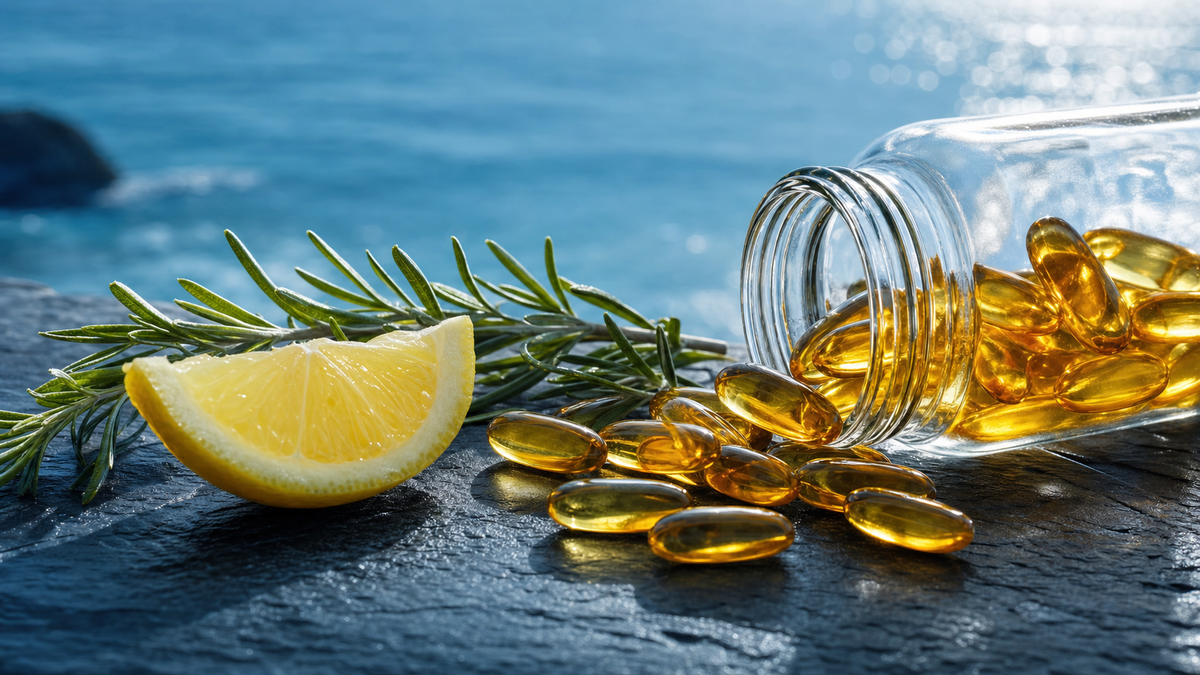

Walk into any supplement store and you'll find fish oil bottles advertising everything from "1,000mg" to "3,600mg" in large print on the front label. Most of those numbers are marketing noise. To find the best fish oil supplement for your needs, you need to look past the total fish oil dose and focus on three things: the combined EPA+DHA content, the form, and the freshness. This guide walks you through all of it.
EPA and DHA Are What Actually Matter
Fish oil is a fat extracted from oily fish like sardines, anchovies, and mackerel. That fat contains omega-3 fatty acids — but not all omega-3s are equal. The two that have the most clinical evidence are eicosapentaenoic acid (EPA) and docosahexaenoic acid (DHA).
EPA is primarily associated with anti-inflammatory effects and cardiovascular and mood support. DHA is a structural component of the brain, retina, and cell membranes — it's essential for cognitive function and particularly critical during pregnancy and early development. Alpha-linolenic acid (ALA), the omega-3 found in flaxseed and walnuts, is not an effective substitute: the human body converts ALA to EPA and DHA at a rate of only 5–10%, which is too low to meet physiological needs.
The American Heart Association recommends approximately 1g of combined EPA+DHA per day for people with existing heart disease, and 2–4g for those with elevated triglycerides (under physician supervision). For general health and prevention, most experts suggest 500mg–1g of combined EPA+DHA daily as a reasonable target.
Here's the catch: a "1,000mg fish oil" softgel might only contain 300mg of actual EPA+DHA. The rest is other fats in the fish oil. Always read the Supplement Facts panel and add up the EPA and DHA milligrams — that's your real dose.
Triglyceride vs Ethyl Ester Form: Why It Matters
Fish oil comes in two primary molecular forms, and they're not equally bioavailable.
Natural Triglyceride (TG) Form
In fish, omega-3s naturally occur bound to glycerol as triglycerides. When fish oil is refined to concentrate EPA and DHA content, manufacturers can either re-esterify it back to triglyceride form (rTG) or leave it as ethyl esters. The triglyceride form is what your digestive system is designed to absorb — studies consistently show 25–70% better absorption compared to ethyl ester form, particularly when taken with a meal.
Ethyl Ester (EE) Form
Most high-concentration fish oils on the market are in ethyl ester form because it's cheaper to produce. Ethyl esters require enzymatic conversion in the gut before absorption. They're not ineffective, but they absorb significantly less well when taken without fat, and some studies suggest they're less stable over time. The AHA's 2018 science advisory specifically noted the bioavailability difference between forms.
If you're taking fish oil for a specific clinical purpose — managing triglycerides, supporting mood, or addressing inflammation — the triglyceride form is the better investment. Nordic Naturals Ultimate Omega 2X delivers 2,150mg of EPA+DHA per serving in the natural triglyceride form — one of the highest-potency, best-bioavailability options available without a prescription.
Freshness and TOTOX: The Quality Metric Nobody Talks About
Fish oil oxidizes. When omega-3 fats are exposed to oxygen, light, or heat, they break down into aldehydes and other oxidation byproducts. Oxidized fish oil not only smells rancid — it may actually be pro-inflammatory rather than anti-inflammatory, which is the opposite of why you're taking it.
The standard freshness metric is TOTOX (total oxidation value), calculated from two components: peroxide value (primary oxidation) and anisidine value (secondary oxidation). The Global Organization for EPA and DHA Omega-3s (GOED) recommends a TOTOX of 26 or below for retail fish oil. Many cheap fish oils exceed this threshold by the time they reach the shelf.
Freshness indicators to look for:
- Lemon or natural flavoring: A legitimate freshness aid — not just masking rancidity, but also reducing the fishy aftertaste that comes with quality oil. Nordic Naturals uses natural lemon flavoring for this reason.
- Nitrogen-purged packaging: Replacing oxygen in the capsule or bottle with nitrogen dramatically slows oxidation.
- Expiration and manufacture date: Buy from brands with transparent dating and fast inventory turnover.
- Third-party TOTOX testing: Look for brands that publish their oxidation values.
If your fish oil smells strongly fishy or produces "fish burps," it may be oxidized. A fresh, high-quality fish oil in lemon flavor should smell mild and pleasant.
Third-Party Testing: IFOS and What It Certifies
The International Fish Oil Standards (IFOS) program is the most rigorous third-party certification in the industry. IFOS-certified products are independently tested for:
- EPA and DHA content accuracy (label claim verification)
- Heavy metals (mercury, lead, arsenic, cadmium)
- PCBs and dioxins
- Oxidation levels (TOTOX)
- Potency
Nordic Naturals products consistently score at or near the top of IFOS rankings. The Nordic Naturals Ultimate Omega 2X is non-GMO verified and Friend of the Sea certified for sustainable sourcing — important considerations beyond just purity. When you're spending money on a supplement you plan to take daily, third-party testing is a non-negotiable quality signal.
Who Benefits Most From Fish Oil
Elevated Triglycerides
This is the strongest evidence base for fish oil. High-dose EPA+DHA (2–4g/day) is an established intervention for hypertriglyceridemia, and a prescription-strength EPA drug (icosapentaenoic acid / Vascepa) has demonstrated significant cardiovascular event reduction in high-risk patients. Over-the-counter fish oil at 2g+ combined EPA+DHA daily is a reasonable supportive step, though people with clinically elevated triglycerides should work with their physician.
Mood and Mental Health
A 2019 meta-analysis in Translational Psychiatry found that omega-3 supplementation — particularly EPA-dominant formulas — was associated with significant reduction in depressive symptoms. The evidence is strongest for EPA at doses of 1–2g/day, and for people with confirmed low omega-3 status. Fish oil is not a substitute for prescribed mental health treatment, but it may support mood as an adjunct.
Inflammation and Joint Health
EPA and DHA are precursors to anti-inflammatory signaling molecules (resolvins and protectins). Research suggests omega-3 supplementation may reduce inflammatory markers and support joint comfort, particularly in people with inflammatory conditions. Effects are modest but consistent across multiple reviews.
General Health Maintenance
For adults eating typical Western diets low in oily fish, daily omega-3 supplementation is a reasonable nutritional insurance policy. The omega-6 to omega-3 ratio in modern diets is estimated at 15:1 or higher — historically it was closer to 4:1. Fish oil helps rebalance this ratio and support the cellular functions that depend on adequate DHA.
Dosage and Practical Tips
For general wellness, 1–2g of combined EPA+DHA daily is a practical target. For triglyceride management or therapeutic purposes, 2–4g (under physician supervision) is more commonly studied. Always take fish oil with a meal containing fat — this significantly improves absorption of both triglyceride and ethyl ester forms.
Splitting your dose (e.g., 1g morning, 1g evening) may improve tolerability and reduce the small risk of GI discomfort. Store your fish oil in the refrigerator after opening to slow oxidation — this is especially important for liquid fish oil, but beneficial for softgels as well.
At 2,150mg of EPA+DHA per 2-softgel serving, the Nordic Naturals Ultimate Omega 2X delivers a clinically meaningful dose in just two softgels — a practical advantage over lower-potency options that require 4–6 capsules to hit the same target.
Frequently Asked Questions
Is it safe to take fish oil every day?
Yes, for most healthy adults at doses up to 3g of combined EPA+DHA per day. The FDA has established 3g/day as generally recognized as safe (GRAS). At higher doses (above 3g), there is a theoretical risk of increased bleeding time, which is relevant if you take blood thinners. People on anticoagulant medications should consult their doctor before using high-dose fish oil.
How do I know if my fish oil is oxidized?
Open the bottle and smell it. Fresh, quality fish oil should smell mild and slightly oceanic — or like the added flavor (lemon, etc.). A strong, unpleasant fishy or paint-like odor suggests oxidation. You can also bite into a softgel: rancid oil will taste noticeably off. If you're consistently getting fish burps, that can also indicate elevated oxidation levels, though it can also just mean you need to take it with food.
What's the difference between fish oil and krill oil?
Krill oil contains EPA and DHA bound to phospholipids rather than triglycerides. Some studies suggest phospholipid-bound omega-3s may absorb slightly better than ethyl ester fish oil, but they compare similarly to triglyceride-form fish oil. Krill oil is significantly more expensive per gram of EPA+DHA, and the sustainability profile of krill harvesting is more debated. For most people, a high-quality triglyceride-form fish oil like Nordic Naturals Ultimate Omega 2X delivers equal or greater EPA+DHA at a lower cost per dose.
Can I get enough omega-3 from plant sources?
Plant sources like flaxseed, chia, and walnuts provide ALA, not EPA and DHA directly. The human body converts ALA to EPA at roughly 5–8% efficiency and to DHA at less than 1%. This is insufficient to meet the physiological needs that EPA and DHA serve, particularly DHA for brain function. Vegans and vegetarians should consider algae-based omega-3 supplements, which provide EPA and DHA directly from the original source (fish accumulate omega-3s from algae they eat). Algae oil is a sustainable, pescatarian-free alternative.
HSA & FSA: Pay With Pre-Tax Dollars
Many supplements and wellness devices qualify for HSA or FSA reimbursement with a Letter of Medical Necessity (LMN). At Workoutyes, we partner with TrueMed — at checkout, you can answer a quick health questionnaire and, if you qualify, get an LMN issued instantly. You then use your HSA/FSA card or get reimbursed by your administrator.
Browse our HSA & FSA Eligible Collection to see every product that qualifies. Nordic Naturals Ultimate Omega 2X is one of our most-loved picks in this category.
This article is for educational purposes only and is not medical advice. Always talk to your doctor before starting a new supplement or device, especially if you take medication or have a health condition. Individual results vary.